
One thing I keep noticing when I speak with sporting directors is that most of them already have a pretty good idea of what they want to do.
They know which positions need strengthening, which players might leave, which contracts are becoming important and what kind of profiles fit the way the club wants to play. Of course, if that is not clear, then that is the first thing to fix.
But in many clubs, I do not think strategy is actually the main problem. Execution is.
A sporting director can start the day with a clear plan and, a few hours later, be dealing with agents, coaches, board requests, contract discussions, a bid for one of his own players and three new names that suddenly appeared in the market.
Somewhere in the middle of all that, he is still expected to stay ahead of what the squad might need in six or twelve months.
That is where capacity becomes a real problem.
Good recruitment starts before you need the player
One of the most frustrating situations in recruitment is finding the right player too late.
You watch him, the data looks good, the scouts like him and the profile makes sense. Then you make the call and realise another club has already been speaking with him for months, or the price has moved, or there are already several offers on the table.
I have heard versions of this story many times, and usually it is not because the club did not know what a good player looked like. They simply did not get to him early enough.
There are too many players, too many leagues, too many reports and too many possible squad scenarios for a small recruitment team to follow everything manually. That is how clubs become reactive even when they do not want to be.
A player leaves, so the search starts. A target disappears, so the shortlist has to be rebuilt. An agent offers someone late in the window, and suddenly the club is trying to work out whether he actually fits.
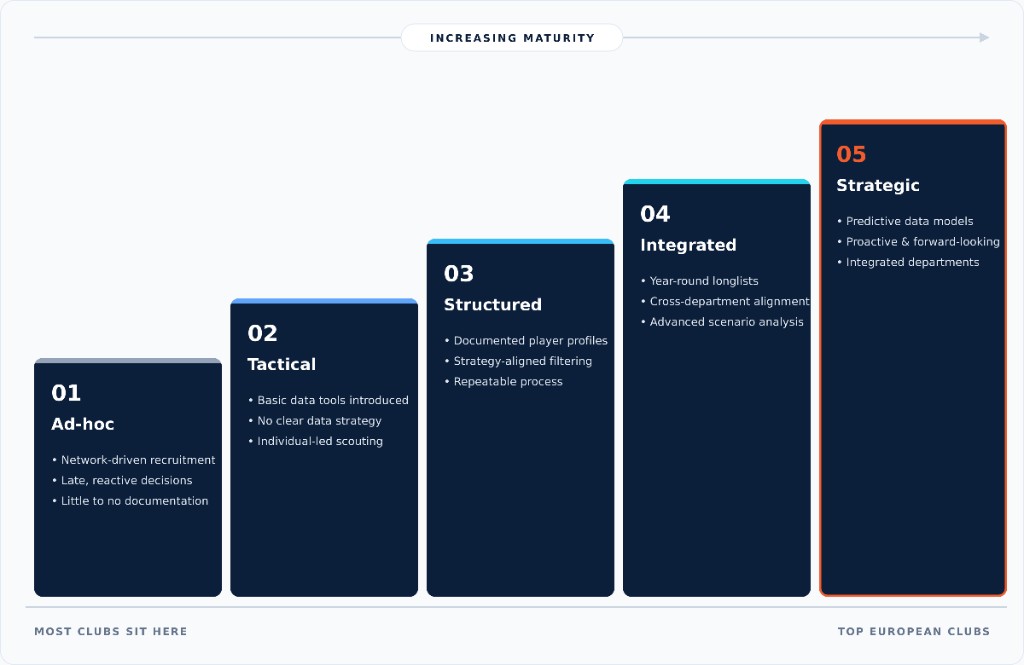
The sporting departments I admire most tend to work differently. If they know there is a reasonable chance that a striker will be sold next summer, they are already following alternatives. If a position is likely to need strengthening, there is already some kind of pipeline in place.
That does not mean they know exactly what will happen. Football is far too unpredictable for that. It simply means they have done enough work in advance to have options when something changes.
Some of the transfers that look very quick from the outside are actually the result of months of work. A player leaves and the replacement arrives a few days later, but the club may already have watched him ten times, discussed him internally, spoken to people around him and understood roughly what a deal would look like.
The transfer happens quickly because the recruitment work did not.
Capacity is part of the strategy
We often talk about recruitment in terms of knowledge. Who has the best scouts, the best data, the strongest network or the best understanding of a particular market.
All of that matters, but I think capacity is underrated.
How many players can you realistically follow properly? Can you keep working on next summer while dealing with the transfer you need to complete today? If one of your players suddenly leaves, do you already know the alternatives, or are you starting from an empty page?
The biggest clubs can solve some of this by hiring more people. Most clubs cannot.
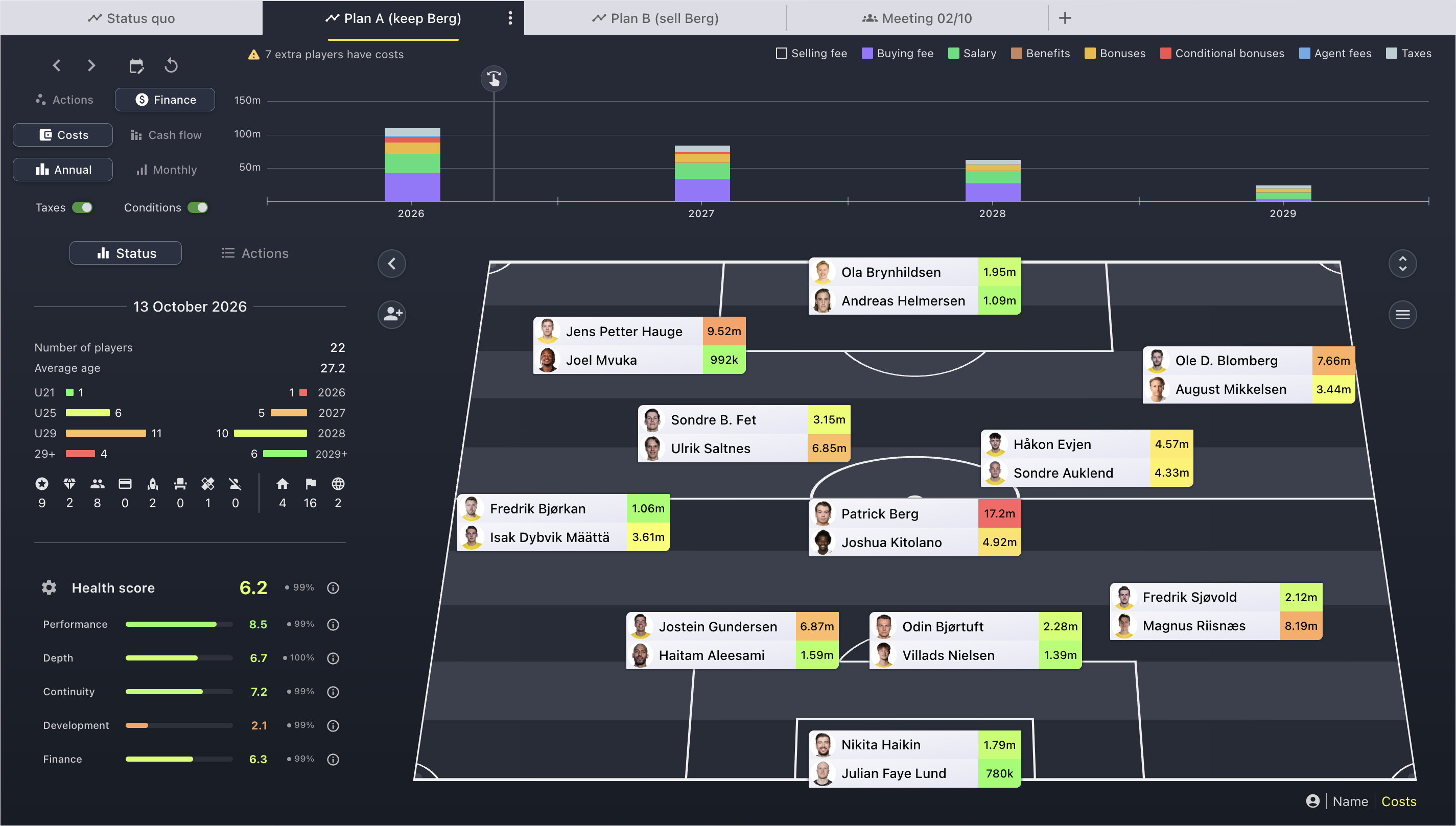
That is where good processes and good software become important. Not because software should tell a sporting director who to sign, but because it can help a small team keep more players alive, organise what the club already knows and make sure the long-term work does not disappear every time something urgent happens.
For me, that is the real execution challenge.
Most clubs already know that they should plan ahead. The hard part is actually finding a way to keep doing it while the market keeps moving and everything else in football demands your attention.
And when something suddenly changes, the best position you can be in is not having to start searching.
It is already knowing where to look.